


Article
What IBM FlashSystem’s agentic AI means for your storage operations
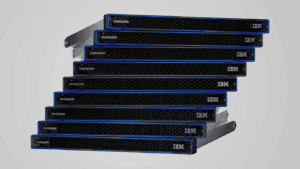
IBM’s latest IBM FlashSystem generation is making a clear statement: primary enterprise storage should not rely on constant human tuning to stay secure, efficient and recoverable.
Instead, IBM is positioning FlashSystem 5600, 7600 and 9600 as an autonomous storage layer, co-run by agentic AI, that continually optimises performance, security and cost in the background. The claim is simple: let the platform handle routine storage decisions so your team can focus on architecture, cyber resilience and recovery.
For anyone responsible for storage management, backup and recovery, disaster recovery or ransomware recovery, this is more than a hardware refresh. It changes what ‘good storage’ looks like.
From arrays you manage to storage that manages itself
The new portfolio combines three systems – IBM FlashSystem 5600, 7600 and 9600 – with a new intelligent services layer, FlashSystem.ai. Together, they are designed to behave less like a set of arrays you constantly manage and more like a colleague that understands intent and acts on your behalf.
Agentic AI in FlashSystem is not just about more dashboards. IBM’s own positioning is that the models are trained on large volumes of real telemetry and can make thousands of small optimisation decisions each day. Placement, tuning and protection are adjusted continuously against your policies, rather than only when an administrator has time to log in and make changes.
For most estates, that is where the real value sits. Capacity and performance are important, but the day-to-day pain is usually elsewhere: growing workload counts, limited specialist time, and an ever-increasing admin and audit burden. Autonomous storage is IBM’s answer to that operational reality.
What ‘up to 90% less manual storage work’ really means
IBM states that FlashSystem.ai can reduce manual storage management effort by up to 90 percent, based on task-level evaluations of common operations such as multi-volume provisioning and policy workflows. That is a headline number, and your mileage will depend on your environment, but the direction of travel is clear.
The kinds of work targeted include:
- repetitive provisioning and expansion tasks for similar workloads
- applying and maintaining consistent protection and retention policies
- performance tuning and workload placement to avoid noisy-neighbour issues
- routine diagnosis and remediation where the platform has seen the pattern before
Crucially, agentic AI does not replace the need for architecture, governance or recovery planning. What it can do is change how your team spends its time: less ticket-driven repetition, more time on design, testing and improving your cyber recovery posture. In lean teams, that shift in focus may deliver more value than the raw efficiency gain.
Policy-driven storage operations and auditability
One of the more important implications of agentic AI is how it changes your runbooks. Instead of documenting long sequences of steps, you describe intent in policy form and let the platform enforce those policies continuously.
That has three direct benefits for operations:
First, key-person risk is reduced. When behaviour is embedded in policies and telemetry rather than in one or two specialists’ heads, you are less exposed when people are unavailable or leave.
Second, governance becomes more consistent. Policy-driven operations help reduce configuration drift, which is a common root cause of resilience gaps and awkward audit findings.
Third, auditability improves. IBM says FlashSystem.ai is designed to provide explainable operational reasoning and can assemble evidence of configuration and operational history to support audits, reducing the time needed to document compliance. Instead of manually reconstructing what changed and why, you can reuse system-generated reasoning as the starting point.
For organisations facing regular regulatory scrutiny or customer due diligence, that can be as valuable as the performance improvements.
Ransomware detection as part of storage operations
The cyber angle is now central to the FlashSystem story. IBM is no longer treating storage as a passive blast radius when ransomware hits, but as an active control point in cyber recovery.
The latest generation introduces hardware-accelerated ransomware and anomaly detection, built into the FlashCore Modules. IBM states that this threat analysis can detect suspicious patterns in under 60 seconds and surface customised recovery recommendations.
For storage operations, that brings detection, response and recovery closer together:
- early alerts from the storage layer can reduce the amount of data impacted before containment
- recovery recommendations can shorten the time between ‘we have a problem’ and ‘we know our next step’
- immutable and safeguarded copies remain the anchor for a clean restore, but the route to them becomes faster and more guided
If your current plan still assumes you will simply restore from backup without considering compromised copies, this represents a meaningful change. Storage becomes part of the incident response fabric, not just an asset that has been attacked.
Questions to answer in your environment
Before you treat FlashSystem’s agentic AI as a strategic move in your roadmap, it is worth answering a few practical questions against your own estate.
How much manual effort can you realistically reclaim? IBM’s 90 percent figure is based on specific tasks under controlled conditions. The better test is to look at a quarter’s worth of tickets and ask which ones disappear, which processes shorten and where your team genuinely gets time back.
How will autonomous threat analysis plug into your SOC and incident response process? Storage-level detection and recommendations only add value if they reach the right people, are triaged sensibly and are reflected in your playbooks. Someone has to own how these alerts flow into your existing tooling and escalation paths.
Can you use the platform’s explainability to strengthen governance? If you need to prove control to auditors, regulators or customers, plan how you will capture and present system-generated reasoning and history alongside your policies and runbooks.
The common theme is validation. The technology is promising, but the real test is how it behaves in your environment, with your people and your constraints.
How Covenco helps you turn claims into outcomes
Covenco’s job is to translate vendor claims into measurable improvements in availability and recovery.
With agentic IBM FlashSystem, that means working with you to:
- assess where autonomous storage management can safely remove day-to-day admin load
- map ransomware detection and recovery recommendations into your SOC, IR and DR processes
- link platform capabilities to concrete RTO and RPO targets, and test whether they hold up under pressure
- design a phased adoption roadmap that reflects budget, skills and risk appetite, rather than assuming a wholesale refresh
The aim is not simply to buy a new platform, but to reduce operational drag and strengthen your cyber recovery position in a way you can explain to the business and to auditors.
Next steps
If you want to understand what IBM FlashSystem’s agentic AI could mean for your storage operations and recovery strategy, the next step is a focused discussion.
Arrange a meeting with your Covenco sales representative to review how the new FlashSystem portfolio compares with your current estate, where autonomous storage can safely take work off your team’s plate, and how the cyber capabilities can support your recovery objectives.
If you would like to explore IBM’s own view of systems, configurations and indicative retail pricing ahead of that conversation, you can find it here:
See IBM’s FlashSystem Retail Pricing
From there, we can work with you to turn configuration choices into a concrete, defensible plan for resilient storage and faster recovery.