


Article
IBM Power S1112: Where It Fits If You’re Still Running Power8 or Power9
If you’re an IT Manager still running Power8 or Power9, there’s a good chance your current systems are doing exactly what you need them to do. They’re stable, your team knows them inside out, and the applications running on them work. That’s precisely why “should we move to Power11?” might just be a harder question than it sounds.
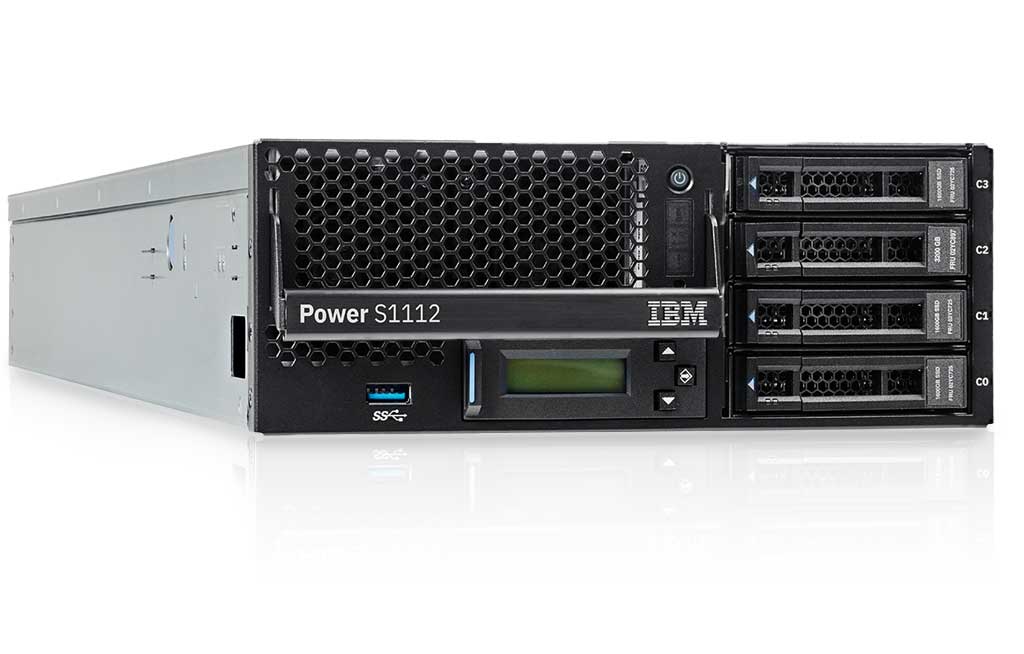
Where the S1112 Sits in the Power11 Family
The Power11 range spans from the entry-level S1112 up to the E1180, IBM’s flagship multi-node system for the largest mission-critical estates. The S1112 sits at the opposite end: a single-socket system built around a Power11 entry Single-Chip Module (eSCM), available with 4 or 10 cores, in either a 2U rack drawer or a tower chassis.
That single-socket ceiling is the detail worth understanding before anything else. The S1122/L1122, S1124/L1124, and E1150 all step up to dual-socket or multi-socket configurations with dramatically more memory, cores, and I/O headroom. The S1112 isn’t a smaller version of those systems – it’s a different category of machine, aimed specifically at single-socket workloads: one branch office, one retail site, one IBM i P05-tier application, or a straightforward like-for-like replacement for an ageing one-socket Power S814 or S914.
If you’re running a single Power8 or Power9 system per site – which is common across retail and distribution estates with regional or branch-level IT – the S1112 is a legitimate, proportionate option. If you’re consolidating multiple older systems onto one platform, or running data-intensive workloads such as SAP HANA, large databases, or container platforms, you’re better served by the scale-out S1124/L1124 range, and the S1112 will under-deliver on headroom within a couple of years.
Performance and Licensing: The Argument That Actually Holds Up
IBM’s headline figures – up to twice the core performance of the Power S914 and up to three times that of the Power S814 – are worth taking seriously, not because they’re impressive marketing numbers, but because of what they mean for software licensing. Most Power software (and a good deal of third-party software) is licensed per activated core, not per unit of throughput. A processor that delivers meaningfully more performance per core means you can run the same workload, or a modestly larger one, without increasing your core count and the licensing bill that comes with it.
This is genuinely the most durable argument for moving off Power8 or Power9, more so than any AI or automation feature IBM leads with in its marketing. If your organisation’s Power spend is dominated by licensing rather than hardware refresh cycles, a Power11 move sized correctly against your actual workload, not against a bigger system “for headroom,” is where the real saving sits.
The IBM i P05 software tier is the other lever worth understanding if you run IBM i. The S1112 supports up to 4 IBM i cores and 64 GB of memory within that tier, while any remaining cores and memory on a 10-core configuration can run AIX or Linux workloads alongside it. That flexibility lets you consolidate a Linux-based reporting or automation workload onto the same box as your core IBM i application, without disturbing your existing P05 licensing position. It’s a genuinely useful feature for smaller sites, not just a checkbox.
Security: The Argument IBM Undersells
Quantum-safe cryptography for secure boot and firmware integrity is standard across the whole Power11 range, including the S1112. IBM tends to present this as a forward-looking, slightly abstract benefit. For regulated Financial Services and larger Retail organisations already working through data protection and cryptographic inventory requirements, it’s more concrete than that: it’s one less gap to explain in an audit, and one less thing to retrofit later. If your organisation is already having conversations about post-quantum cryptography readiness with your compliance or security team, that’s a legitimate reason to bring a hardware refresh forward, independent of performance considerations.
The Migration Itself: Where the Real Work Is
The part IBM’s data sheets understandably don’t dwell on is that moving from Power8 or Power9 to Power11 is not usually a ‘swap the box’ exercise. A few things worth planning for early:
- AIX and IBM i version support. Confirm your current OS release is supported on Power11 before anything else. Older AIX or IBM i releases may need an upgrade in their own right, which is a separate project with its own testing and change control implications.
- Software and middleware compatibility. Third-party software, especially anything tied to specific hardware identifiers, licence keys, or older device drivers, needs checking against Power11 before you commit to a migration date.
- Migration method. Depending on your environment, this might be a Live Partition Migration from a virtualised Power9 environment, a save/restore cycle, or a full re-platform. Each has different downtime, risk, and testing implications, and the right choice depends heavily on how your current estate is configured, not just which target system you buy.
- PCIe and adapter compatibility. The S1112 has four PCIe Gen4 slots in the system unit, expandable via up to two optional I/O drawers. If your current system carries a large number of network, fibre channel, or SAS adapters, map your existing slot usage against this before assuming a straightforward like-for-like move.
None of this is a reason to avoid Power11. It’s a reason to scope the migration properly, with realistic timescales, rather than treating it as a same-day hardware swap.
Tower or 2U Rack: Benefit or Restriction?
The S1112’s two physical formats – a 2U rack drawer or a standalone tower – are part of what makes it suit branch, retail, and distribution environments so well. Not every site has a proper server room or a rack; a tower option that can sit in an office or stockroom, with enterprise-grade Power reliability underneath it, is a genuine practical advantage for exactly the customer base this article is aimed at.
The trade-off is what happens when that site’s requirements grow. Because the S1112 is single-socket by design, there’s no in-place upgrade path to more sockets or a bigger chassis – growth means workload migration to a larger system such as the S1122/L1122 or S1124/L1124, not an on-site expansion. For a single, stable branch workload that isn’t expected to grow materially, that’s a non-issue. For a site you expect to take on more applications, more users, or a heavier reporting/AI workload over the next three to five years, it’s worth sizing one step up from the outset rather than treating the S1112 as a starting point you’ll simply grow out of.
The Chip Shortage: A Genuine Complication, Not Just IBM’s Problem
It would be an oversight to write about hardware pricing in 2026 without addressing the current memory and semiconductor market directly, because it isn’t specific to IBM. Global demand for AI infrastructure has pulled an enormous share of DRAM and NAND production toward AI accelerators and data centre memory, and DDR5 pricing in particular has risen sharply over the past year as a direct result. Server OEMs across the industry, not just IBM, are quoting shorter price validity windows and longer lead times than they were twelve months ago, and multiple industry analysts expect this to persist into 2027 as new fabrication capacity comes online only gradually.
The S1112, like every Power11 system, is built around DDR5 memory, so it isn’t insulated from the current crisis. What that means practically: pricing and lead time volatility is now a normal part of any Power11 conversation, not a Covenco-specific quirk, and getting a formal quote sooner rather than later is a reasonable, low-risk move if you’re already planning a migration within the next 12 months. If your current Power8/Power9 systems genuinely aren’t under pressure and your workload isn’t at risk from IBM’s support timelines, there’s equally no need to be pushed into an unplanned purchase by shortage headlines alone; buying earlier than needed simply because prices might rise further isn’t automatically the more cost-effective choice. This is a case-by-case sizing and timing decision, not a blanket ‘buy now’ signal, and it’s worth working through with real numbers rather than general market commentary.
If You’re Not Ready to Move Yet
Plenty of our customers are in exactly this position: current Power8 or Power9 systems performing reliably, no immediate business case to disrupt them, but an awareness that IBM’s support clock is ticking. Covenco continues to support organisations running older Power systems well beyond IBM’s own end-of-support dates, through a portfolio of hardware brokerage, stock parts, and third-party maintenance, alongside upgrades and enhancements to extend the useful life of systems you already own. That’s a genuine strategic option in its own right, not just a stop-gap: it buys time to plan a Power11 migration properly, on your own schedule, rather than reactively.
Where This Leaves You
The S1112 is a well-specified, honestly-positioned entry point into Power11 for single-socket branch, retail, and distribution deployments, and for straightforward IBM i P05-tier upgrades. It is not the right system for consolidation projects or data-intensive scale-out workloads, and its single-socket design means future growth is a migration to a larger system rather than an in-place expansion. Combined with a memory market that’s genuinely more volatile than usual, the right next step for most Power8/Power9 users isn’t a snap decision either way – it’s a proper sizing and licensing review against your actual workload, so that whichever system you land on, and whenever you buy it, it’s the right one for where your business is heading, not just where IBM’s product range happens to start.
Request a Proposal | Speak to a Covenco IBM Power Specialist