Why the quantum encryption threat demands action now
Harvest Now, Decrypt Later (HNDL): the quantum threat already targeting UK organisations
Adversaries do not need quantum computers to start the attack. They are capturing encrypted data now and storing it until decryption becomes viable. Legal, financial, healthcare, and government data transmitted today is at risk of future exposure.
NIST published its first post-quantum cryptographic standards in 2024. The NCSC has issued migration guidance for UK regulated organisations. The window for a structured, managed response is open. It will not stay open indefinitely.
- NIST FIPS 203, 204, and 205 published in 2024, establishing the algorithms that will underpin regulatory migration timelines.
- Y2Q probability estimated at 50:50 by 2031 by Dr Michele Mosca.
- NATO-approved supplier addresses both modern and legacy infrastructure.

Digital quantum key distribution for enterprise IP networks
D-QKD: quantum-safe key distribution, no hardware required
Traditional key exchange sends cryptographic keys over the same network path as your data. Capture the traffic, compromise the key exchange using Quantum/AI and you capture the keys. D-QKD eliminates this by delivering keys independently at each endpoint using and out of band network channel and adding an extra layer of symmetric encryption using Quantropi’s Quantum Permutation Pad technology. Keys are always protected and never transmitted over the data path.
Runs in software over any IP network. No dark fibre. No distance limitations. Benchmarked by Deutsche Telekom and tested by NATO.
- Supports ETSI GS QKD 014.
- Native integration with Cisco, Palo Alto Networks, Juniper, Fortinet, and Nokia and Ciena for fiber networks.
- Built for financial services, legal, healthcare, public sector, and multi-site enterprises.

Post-quantum protection for legacy systems and OT environments
Quantum-safe forward proxy: protecting the systems you cannot re-engineer
Not every system in your estate can be updated. OT devices, fixed-firmware appliances, clinical systems, and legacy financial platforms may pose significant challenges and third party dependencies for post-quantum cryptography upgrades. The quantum-safe forward proxy sits in front of these systems, re-encrypting outbound traffic using quantum-safe algorithms before it crosses untrusted networks. The underlying device requires no modification.
No rip-and-replace. No downtime. Harvest Now, Decrypt Later (HNDL) exposure closed off at the boundary.
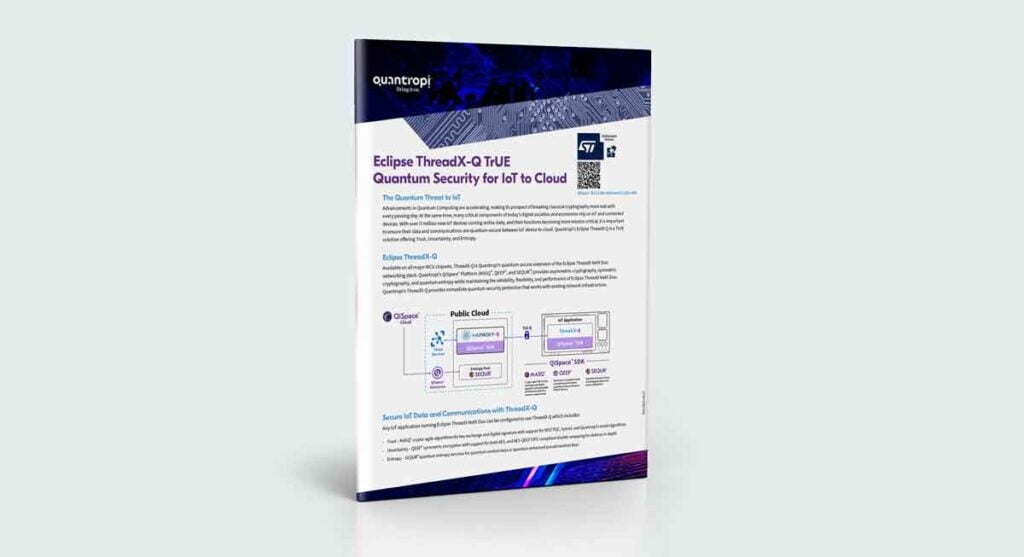
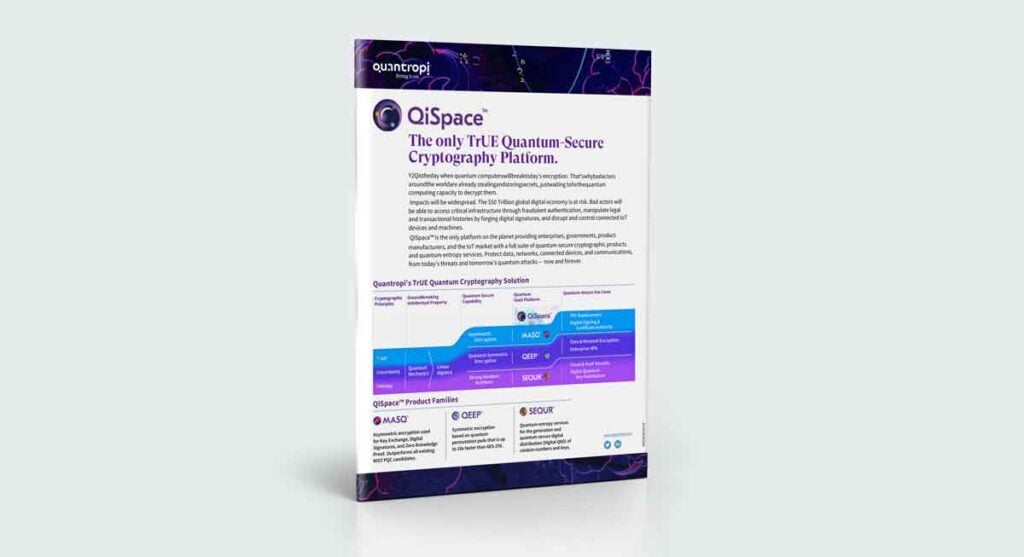
- Powered by Quantropi’s TrUE suite: MASQ, QEEP, and SEQUR.
- Built for NHS Trusts, manufacturing, utilities, critical national infrastructure, and IBM Power platforms.
A trusted partnership
Covenco and Quantropi: infrastructure expertise meets quantum-grade security
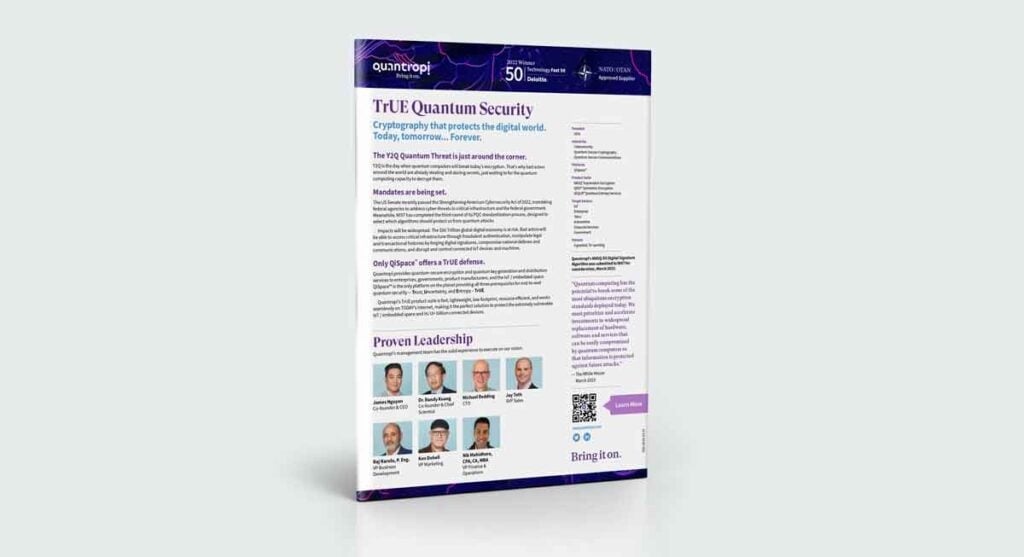
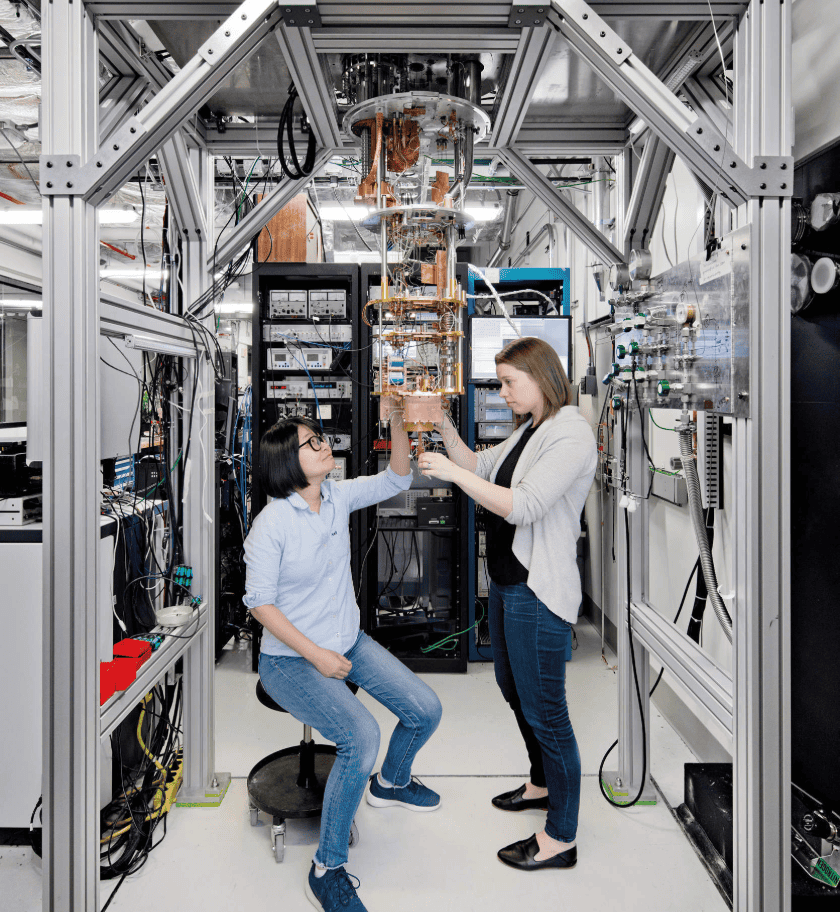
Covenco has secured critical IT infrastructure for UK organisations since 1989. Quantropi’s QiSpace is positioned as the only end-to-end quantum security SaaS platform combining all three cryptographic prerequisites in a single deployable solution. Together, we give IT directors and security teams a practical, supported route to post-quantum readiness.
- NATO-approved supplier.
- Benchmarked by Deutsche Telekom in their Open QKD Lab.
- Tested by NATO, Siemens, and Palo Alto Networks
- Aligned to NIST FIPS 203, 204, and 205 and NIST 800-90B
- IEEE-recognised research with 13 patents and 45 academic publications
- Deloitte Technology Fast 50 winner, 2022.

Free practical guide for IT Directors and security leads
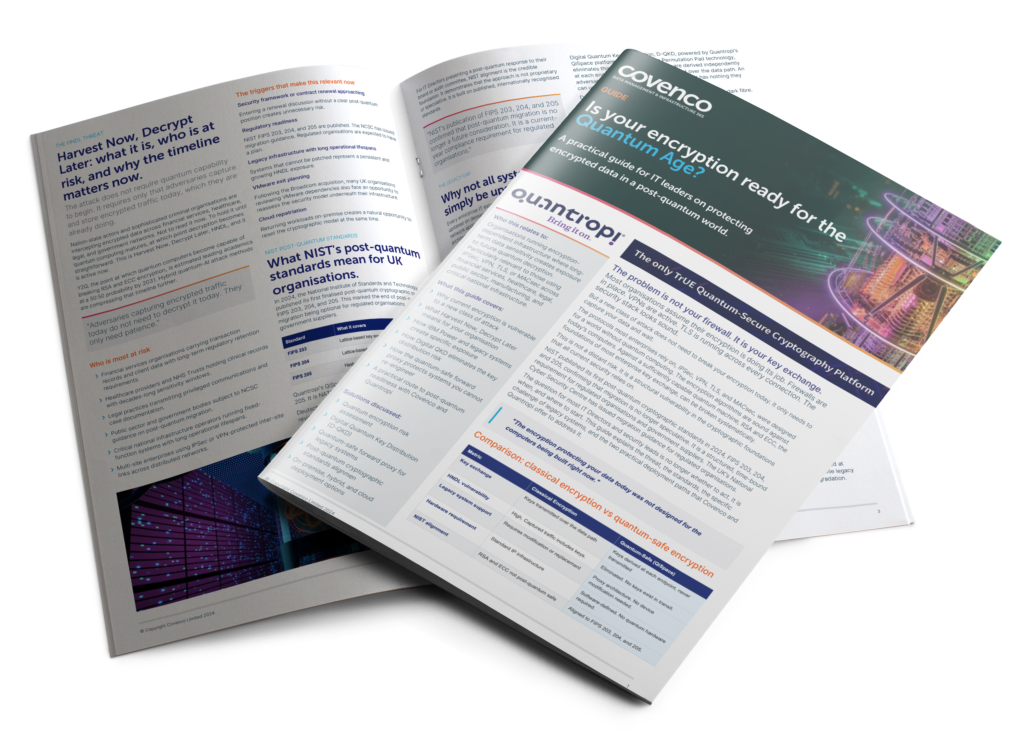
Is your encryption ready for the quantum age? Download the guide.
Our co-branded guide covers the HNDL threat, NIST post-quantum standards, the legacy estate challenge, and how to assess your organisation’s current exposure. Written for IT Directors, CISOs, and heads of IT security in regulated UK sectors.
- Covers D-QKD, quantum-safe forward proxy, and NIST migration requirements.
- Practical next steps for financial services, healthcare, public sector, and critical national infrastructure.
Find out if your encryption is ready for the quantum age.
Speak to a Covenco specialist about your current cryptographic exposure and what a practical route to
quantum-safe readiness looks like for your organisation.
Download Quantropi's guides to post-quantum encryption