


Reports
IDC Report: Performance, Agility, and Scalability for Succeeding in the AI and Hybrid IT Era
IBM Power11 for AI Workloads – download the full IDC report
Resource type: Third-Party Research / IDC White Paper
Overview
IDC’s June 2025 white paper, sponsored by IBM, looks at how organisations are preparing their infrastructure for generative AI and hybrid, multi-cloud operations, and where IBM’s Power11 platform fits against that backdrop. The report draws on IDC’s own survey data alongside its Future of Digital Infrastructure framework, a model IDC uses to assess strategic infrastructure investment across five areas: AI-ready infrastructure, autonomous operations, hybrid and multicloud interoperability, edge-optimised architecture, and digital infrastructure centres of excellence.
The headline finding is one most IT leaders will recognise from their own budget conversations: organisations increasingly treat generative AI as a distinct, strategic workload requiring dedicated infrastructure and vendor strategy, comparable in scale to how they once approached ERP or e-commerce. IDC’s research found that a large majority of organisations expect GenAI to demand a dedicated approach across infrastructure, software, data, cloud, and services, rather than an extension of existing IT. Among organisations with more GenAI experience, on-premises infrastructure was the preferred environment for model tuning, which IDC attributes largely to data compliance and confidentiality concerns.
At the same time, the report is candid about where current infrastructure falls short. CPU speed, memory capacity, and networking were cited most often as the resource bottlenecks limiting on-premises compute environments, with power and cooling requirements also featuring prominently. That combination, demand for dedicated AI infrastructure against constrained current capacity, is the gap IDC frames Power11 as addressing.
IDC’s Future of Digital Infrastructure framework, which underpins much of the report’s structure, groups strategic infrastructure investment into five areas: AI-ready infrastructure, autonomous operations, hybrid and multi-cloud interoperability, edge-optimised architecture, and digital infrastructure centres of excellence, the last being a governance model rather than a technology. The framework is IDC’s own construct rather than an independent standard, but it’s a reasonable checklist for IT leaders to sense-check their own infrastructure strategy against, regardless of which vendor’s platform they’re evaluating.
On the platform itself, IDC highlights three areas of differentiation: AI acceleration built into the Power11 processor (with a further off-chip accelerator planned), automation capabilities aimed at reducing planned downtime and operational overhead, and a consistent hybrid cloud experience spanning on-premises and IBM’s Power Virtual Server offering. IDC also notes that survey respondents most commonly associate infrastructure automation with improved security, followed by operating cost savings, reinforcing why IBM’s autonomous operations pitch is likely to resonate with buyers evaluating the platform.
Covenco’s Perspective
This report is worth reading on its own terms rather than as a straightforward endorsement of one platform. IDC is transparent that it is IBM-sponsored, and the framing throughout is naturally sympathetic to Power11’s positioning. That said, the underlying survey data on GenAI infrastructure demand and on-premises bottlenecks reflects patterns we recognise from conversations with our own customer base, and they are worth treating seriously regardless of which vendor commissioned the research.
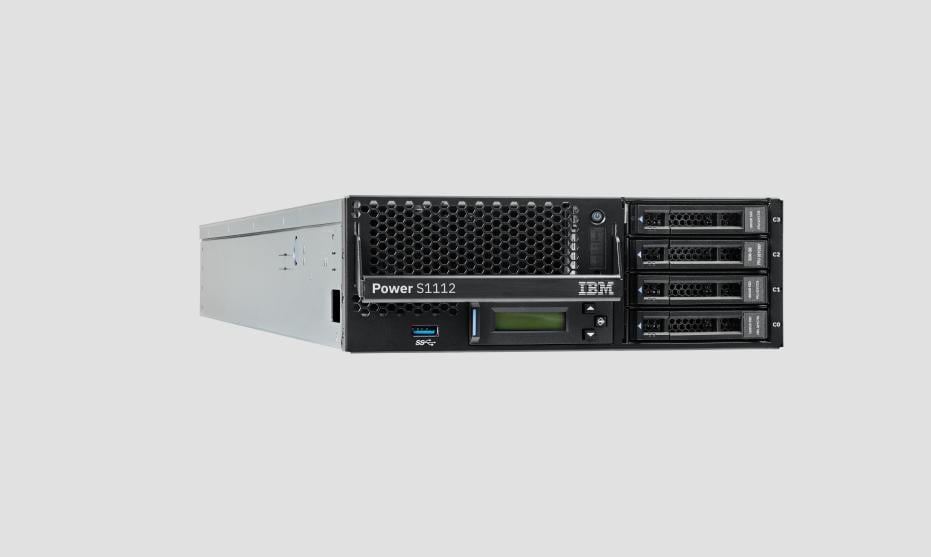
Where we’d add a note of caution for UK IT managers specifically: the report’s infrastructure investment figures and survey base are global, and adoption pressure around dedicated GenAI infrastructure varies significantly by sector and by how far along an organisation already is with AI pilots. For many of our customers running AIX, IBM i, and Linux estates, the more immediate and quantifiable case for Power11 is still the one we make most often: licensing efficiency from higher per-core performance, consolidation of ageing Power8/Power9 estates, and the embedded quantum-safe security features now standard across the range, rather than GenAI workloads specifically. AI acceleration is a genuine and growing part of the conversation, particularly for edge inferencing use cases on systems like the Power S1112, but it’s rarely the first or only reason a Power11 upgrade gets approved.
Where the report is most useful practically is as a prompt to have the right conversation early: if GenAI infrastructure is on your roadmap even at a planning stage, it’s worth factoring into a Power11 sizing and TCO exercise now, rather than as a separate procurement later. That’s particularly true given how differently the report’s own bottleneck data – CPU speed, memory, and networking – maps onto a real upgrade decision depending on which of those constraints is actually limiting your current estate. Our account managers can walk through what that looks like against your current environment, including where automation and hybrid cloud flexibility genuinely reduce operational overhead versus where they’re a longer-term roadmap item.